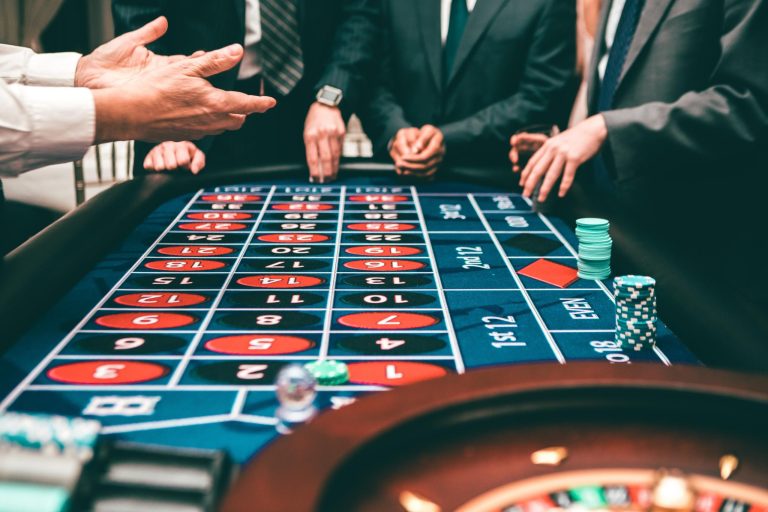
Roulette, with its spinning wheel and bouncing ball, has captivated gamblers for centuries. And with the rise of online casinos, the game is accessible like never before. But as the internet teems with strategies for winning big, one has to wonder, do these systems really work? This article is a deep dive into the world of roulette systems to find out if they’re a sure bet or a gambler’s delusion betflixco.
Understanding Roulette: A Game of Chance and Mathematics
Roulette presents a fascinating paradox—it’s both a game of pure chance and one in which mathematical principles might just be your best allies. The game is simple: players bet on numbers, colors, or sets of numbers they believe the spinning ball will land on. It’s the type of game that you could play blindfolded or armed with a calculator and still have the same odds of winning. This duality of chance and math forms the foundation of every roulette system.
The House Edge and Probability
At the heart of understanding roulette systems is grasping the concept of the ‘house edge.’ Every casino game is designed to give the house a statistical advantage, ensuring over time, they’ll always come out ahead. In American roulette, the house edge is 5.26% on every bet, except the ‘basket,’ which stands at an eye-watering 7.89%.
Probability dictates that each spin of the wheel is an independent event, and therefore, past spins do not influence future spins. So, how can systems claim to negate the power of probability and the house edge?
Roulette Systems Under the Microscope
In the world of gambling, there’s no shortage of self-proclaimed experts touting systems that promise to “beat the wheel.” Some are based on mathematical theory, while others are steeped in superstition. Let’s dissect a few of the most popular ones to see if they hold up.
The Martingale System
The Martingale is perhaps the most famous roulette system and is also one of the simplest. The premise is to double your bet after every loss, ensuring that when you eventually win, you’ll recover all your previous losses and make a profit equivalent to your original stake. Sounds foolproof, right?
The reality is more complicated. For the Martingale to work, a player needs an unlimited bankroll and a table with no betting limits. One long losing streak could bankrupt a player using this method. Even if you have deep pockets, casinos have maximum bets for a reason—to protect themselves against exactly this type of high-risk betting.
The Fibonacci System
The Fibonacci sequence, where each number is the sum of the two preceding ones, is the basis for another popular roulette system. Starting with a one-unit bet, you move up and down the sequence with wins and losses. The idea is that wins will recoup the previous bets, with the final goal of making a profit.
Mathematically, the Fibonacci system is no more sound than the Martingale. Like any betting strategy, it doesn’t alter the house edge or the game’s odds. At best, it can be a fun way to structure your bets, giving the illusion of a logical path to potential riches.
The D’Alembert System
The D’Alembert system works on the principle of equilibrium. After a win, you decrease your bet by one unit, and after a loss, you increase it by one. The theory is that over time, your wins and losses should balance out, leaving you with a small profit. However, in practice, the D’Alembert system is just as vulnerable to streaks of good or bad luck as any other system.
Can Strategy Trump Luck?
Despite the unimpressive track record of roulette systems, some players advocate for combining strategy with intuition to mitigate losses and potentially increase winnings.
Wheel Watching and Bias Analysis
In brick-and-mortar casinos, some players engage in ‘wheel watching,’ searching for any perceived irregularities in the wheel’s spin or the croupier’s throw. The goal is to identify a bias that could affect where the ball lands. While it’s theoretically possible for a wheel to be biased, modern casinos take extensive measures to ensure fair play, frequently servicing and switching out roulette wheels to avoid consistent patterns.
Money Management and Discipline
Money management is a critical component of any gambling strategy. Developing a clear system for how much to bet and when to walk away can help players avoid the pitfalls of chasing losses with ever-increasing stakes. As with any type of investing, discipline is key. Those who treat gambling like an investment—with a clear upper limit on how much they’re willing to lose—stand to fare much better over the long term.
Psychological Edge
The psychological aspect of gambling should never be underestimated. A cool head and a relaxed approach can go a long way towards making shrewd decisions and having a fun, positive gambling experience. Approaching the game as a form of light entertainment rather than a serious income source may not lead to riches, but it can certainly spread the joy of gaming without the heavy burden of expectation.
The Final Spin: Roulette Systems and Reality
As enticing as they may seem, roulette systems do not provide a sound means of consistently winning at roulette. The game is designed to be entirely random, with each spin independent of the last. This means that no system can guarantee a win, and over time, the house edge will always prevail.
Instead of relying on fallible systems, players are better off focusing on responsible gaming practices. This means setting realistic expectations, managing your bankroll effectively, and understanding that roulette—like all casino games—is primarily a form of entertainment that comes with financial risk.
For those looking to play roulette online or at their local casino, the key takeaway is to approach the game with a grain of salt and an understanding of the inherent risks. While systems can offer structure to your bets, they won’t tip the scales in your favor. It’s the game’s unpredictability that makes it riveting, and in the end, that’s what keeps players coming back for another spin.
About the Author